Traditional Wooden Boat Building Question
12.04.2021
 WOOD BOAT CONSTRUCTION: Practical and Traditional - Wave Train
Although wooden boat building is too labour intensive for wooden boats to compete commercially with their plastic counterparts, wood is still one of the best structural materials for small boats. Wood and epoxy are used to build some of the world's best multi-hull sailing boats, sprint kayaks and rowing shells. Wood is up to 10 times stiffer Traditional Wooden Boat Building Question than fibreglass by weight and nearly 6 times stiffer than kevlar-epoxy composite. Thus your energy is used moving the boat, not expended flexing Traditional Wooden Boat Building Question the hull.� All the wood is saturated in epoxy so that most of the maintenance associated with traditional wooden boats is Traditional Wooden Boat Building Question eliminated. Can I really build a boat? If you are still unsure about your ability to build one our kits you can purchase Traditional Wooden Boat Building Question Traditional Wooden Boat Building Question the boat building DVD or the plans and construction manuals for most kits. Traditional Boat Building | Returning Old Skills to The Highlands of Scotland.� Wooden boatbuilding - Faber Navalis: a film by Maurizio Borriello. The traditional boat builders live in Zanzibar's fishing village of Mahurubi, where the mahogany boats are crafted completely by hand.� In the village, locals enjoy a traditional way of life, with the men crafting fishing boats by hand. London-based photographer Christopher Wilton-Steer recently found himself on this beautiful part of the island, Traditional Wooden Boat Building Question having visited Zanzibar as part of a local assignment. �I'm fascinated by other cultures and interested in photography that educates, demystifies, and Traditional Wooden Boat Building Question Traditional Building Question Wooden Boat challenges perceptions�, he tells Lonely Planet.
WOOD BOAT CONSTRUCTION: Practical and Traditional - Wave Train
Although wooden boat building is too labour intensive for wooden boats to compete commercially with their plastic counterparts, wood is still one of the best structural materials for small boats. Wood and epoxy are used to build some of the world's best multi-hull sailing boats, sprint kayaks and rowing shells. Wood is up to 10 times stiffer Traditional Wooden Boat Building Question than fibreglass by weight and nearly 6 times stiffer than kevlar-epoxy composite. Thus your energy is used moving the boat, not expended flexing Traditional Wooden Boat Building Question the hull.� All the wood is saturated in epoxy so that most of the maintenance associated with traditional wooden boats is Traditional Wooden Boat Building Question eliminated. Can I really build a boat? If you are still unsure about your ability to build one our kits you can purchase Traditional Wooden Boat Building Question Traditional Wooden Boat Building Question the boat building DVD or the plans and construction manuals for most kits. Traditional Boat Building | Returning Old Skills to The Highlands of Scotland.� Wooden boatbuilding - Faber Navalis: a film by Maurizio Borriello. The traditional boat builders live in Zanzibar's fishing village of Mahurubi, where the mahogany boats are crafted completely by hand.� In the village, locals enjoy a traditional way of life, with the men crafting fishing boats by hand. London-based photographer Christopher Wilton-Steer recently found himself on this beautiful part of the island, Traditional Wooden Boat Building Question having visited Zanzibar as part of a local assignment. �I'm fascinated by other cultures and interested in photography that educates, demystifies, and Traditional Wooden Boat Building Question Traditional Building Question Wooden Boat challenges perceptions�, he tells Lonely Planet.
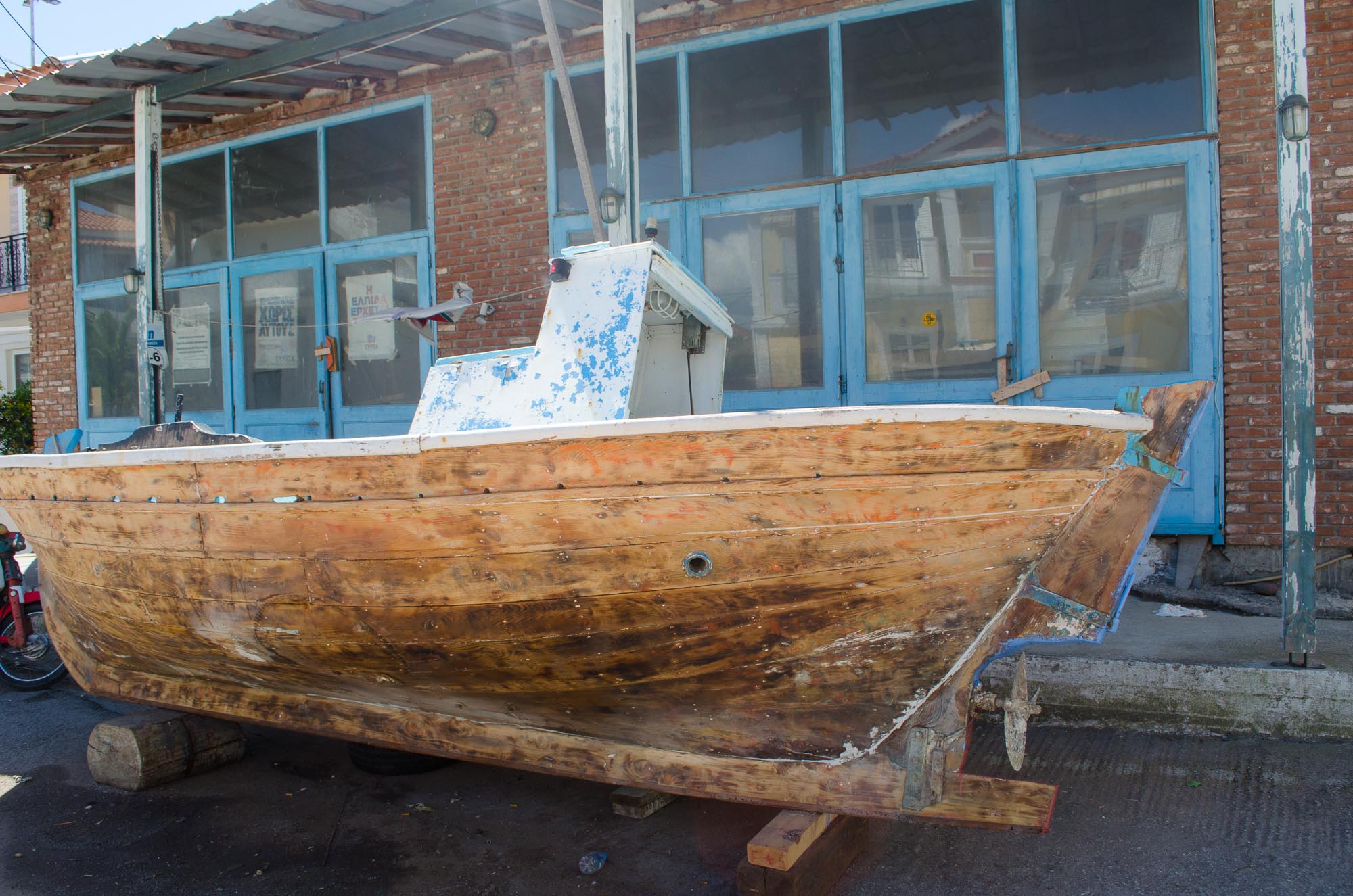

Many assume therefore it must now be obsolete. Wood certainly does not lend itself to mass Traditional Wooden Boat Building Question production the way fiberglass does, though there were a few builders who manufactured wood boats on something like a production basis not long Traditional Wooden Boat Building Question Traditional Wooden Boat Building Question before the advent of glass.
Wood does have some distinct virtues. It is light, even compared to modern building materials, and in Traditional Wooden Boat Building Question Wooden Boat Traditional Building Question terms of tensile strength is stronger per pound than common electrical-grade fiberglass.
In terms of stiffness, it is stronger per pound than S Traditional Wooden Boat Building Question Traditional Wooden Boat Building Question glass, E-glass, and Kevlar. In terms of its total structural efficiency, it is better than all of these materials, including carbon fiber. One big problem with wood, however, is that certain lifeforms like to eat it. Various fungi can infest and consume it, causing what Traditional Wooden Boat Building Question Traditional Wooden Boat Building Question is known as dry rot. Marine borers like the Teredo worm, or boring insects like carpenter ants and termites, can also chew their Traditional Wooden Boat Building Question way through a boat pretty quickly.
Wood also rots when it gets too wet, is easily ignited, and is soft, with poor Traditional Wooden Boat Building Question abrasion resistance. Structurally, in one important sense, it is deficient in that it is much less dense than other materials and thus takes Traditional Wooden Boat Building Question Traditional Wooden Boat Building Question up a lot of space. A wood hull must normally be much thicker than an equivalent glass hull, and its interior structural Traditional Question Building Wooden Boat parts must also be larger. Indeed, wood cannot be used at all to make certain small parts that carry great loads such as Traditional Wooden Boat Building Question Traditional Wooden Boat Building Question bolts, tie-rods, and rigging wire simply because it is too soft and too fat to fit.
Perhaps the biggest advantage wood has over any other material, especially when it comes to building boats, is that it is inherently romantic. For this reason alone, it is likely someone somewhere will always be building wooden cruising boats, and that other people will always be sailing them.
This is the most Traditional Wooden Boat Building Question traditional method of building a wood boat. The principle is simple, though the details are complex. The fundamental structure of a plank-on-frame Traditional Wooden Boat Building Question Traditional Wooden Boat Building Question vessel is defined by a keel, which is the horizontal backbone of the hull; a more vertical stem, which forms the bow; and a vertical sternpost plus, in the case of many yachts with long overhangs, a much less vertical horn timber that terminates in Traditional Wooden Boat Building Question Traditional Wooden Boat Building Question Traditional Wooden Boat Building Question the transom , which forms the back of the boat.
On deep-keel vessels, especially on sailboats, there is also often what is called deadwood Traditional Wooden Boat Building Question Traditional Wooden Boat Building Question Traditional Wooden Boat Building Question fastened beneath the keel. The forward section is normally inhabited by a solid casting of metal ballast, preferably lead, that is fastened to the bottom of the boat. A full-keel plank-on-frame sailboat under construction. You can see both the deadwood and the lead ballast down low Photo courtesy of Rockport Marine.
To help support the hull, lateral stringers are installed inside the frames. The skin of the hull consists of a series of planks fastened to the outside of the frames. These planks may be laid on the frame with their edges slightly overlapping, which is known as clinker, or lapstrake, construction. This is often done with smaller boats, but hardly ever with Traditional Wooden Boat Building Question Traditional Wooden Boat Building Question Traditional Wooden Boat Building Question larger boats, as the many ridges formed where the planks overlap greatly increases wetted surface area.
Alternatively, planks can be laid on Traditional Wooden Boat Building Question the frame edge to edge, creating a fair, smooth surface, which is known as carvel construction. Open seams on a carvel hull awaiting Traditional Wooden Boat Building Question caulking. Note the tufts of cotton hanging out where caulking is underway Photo courtesy of Rockport Marine.
The deck of the boat, meanwhile, Traditional Wooden Boat Building Question is supported by a series of transverse deck beams, the ends of which are fastened to lateral shelves installed along the inside of the hull at the top of the frames. Traditionally, the deck consists of planking fastened to the deck beams with all seams, Traditional Wooden Boat Building Question again, carefully caulked.
Another common way to seal decks, often used on yachts, is to cover the planking with painted canvas. These days, however, many wood decks are simply good-quality marine plywood sealed with epoxy. Even from this abbreviated description it should be clear this is a labor-intensive way to build a boat. Much skill is also required. Just selecting wood to build with is an art, Traditional Wooden Boat Building Question as there are numerous criteria to meet.
The best wood should be cut only in winter to minimize the retention of moisture and microorganisms. It should then be air-dried in a climate-controlled environment for as long as possible�many months at a minimum.
The lumber should also Traditional Wooden Boat Building Question be carefully milled to produce planks and pieces with the wood grain properly aligned to carry anticipated loads in the boat. Even Traditional Wooden Boat Building Question Traditional Wooden Boat Building Question if you use the best fasteners silicon bronze screws and bolts are preferred, though Monel is technically superior what ultimately limits the strength of a plank-on-frame boat is not the wood it is made from, but the fasteners holding it together.
This weakness manifests itself Traditional Wooden Boat Building Question in various ways. First, because they are made from many different pieces, and in particular because so many plank seams are permanently submerged, Traditional Wooden Boat Building Question plank-on-frame boats are apt to leak. Many are continually taking on water when afloat, and normally the only variable is the rate at which water is coming aboard. Invariably this increases when conditions get worse. I once sailed across the North Atlantic aboard a plank-on-frame Traditional Wooden Boat Building Question schooner�one time we almost sank; the other time we did though, fortunately, this was in a river on the other side.
Plank-on-frame boats Traditional Wooden Boat Building Question also often have deck leaks. The problem here is that wood in the deck is constantly swelling and shrinking as it gets Traditional Wooden Boat Building Question wet and dries out. If the deck has open seams, all this expanding and contracting is apt to create gaps somewhere.
Even with painted canvas covering the seams, or with a solid plywood deck sealed in epoxy, there are again many fasteners securing hardware, each offering a potential route for water intrusion. Other structures sprouting from the deck�deckhouses, hatches, raised gunwales, etc. World-famous small-boat cruiser Larry Pardey waters Traditional Wooden Boat Building Question Traditional Wooden Boat Building Question the deck of his boat, Taleisin , to keep the planks swollen tight. Larry is a master boatwright he built Taleisin himself and maintains his boats scrupulously.
Finally, plank-on-frame boats can be a bear to maintain. All that wood, above the water and below, needs to be either painted or varnished on a regular basis.
Leaks must be policed and stanched if possible. Moist areas in the structure must Traditional Wooden Boat Building Question be sought out, constantly monitored for rot, and replaced if the rot gets out of hand.
Most, however, like Moitessier, would much prefer to just go sailing. Plank-on-frame boats still have a strong cult following and a relatively large number of older wooden yachts are Traditional Wooden Boat Building Question Traditional Wooden Boat Building Question sailed and maintained by devoted owners.
But the most exciting wooden boatbuilding these days is done with composite wood-epoxy construction. The key ingredient is modern epoxy, which is not only a tenacious adhesive, but is also highly elastic and nearly impermeable to water.
Epoxy also Traditional Wooden Boat Building Question protects the wood from hungry creatures that want to eat it. Furthermore, a wood-epoxy hull forms a one-piece monocoque structure that cannot leak unless punctured. In most cases, to improve abrasion and impact resistance, the hull and deck are also sheathed in one or more Traditional Wooden Boat Building Question Traditional Wooden Boat Building Question layers of fiberglass cloth. The result is a boat with many of the virtues of fiberglass, with the added benefits of built-in insulation, plus all the fuzzy romantic feelings inspired by a genuine wood finish.
There are many ways to construct a wood-epoxy boat. One Traditional Wooden Boat Building Question could, for example, build a wood-epoxy plank-on-frame vessel, but this would be labor intensive and the boat would be needlessly heavy and thick.
In practice, there are three basic approaches�strip-plank construction, sheet plywood construction, and so-called cold-molded construction. Each has many variations, and to some Traditional Wooden Boat Building Question Traditional Wooden Boat Building Question extent different techniques can be combined in a single hull.
In a simple strip-plank hull the frame is an important part of the Traditional Wooden Boat Building Question structure, and the strip planks, which are narrow�with a square section shape, are both attached to the frame and edge-nailed to each other. Boats were often built like this in the traditional manner and are still built without being encapsulated in epoxy. In more modern Traditional Wooden Boat Building Question Wooden Building Question Traditional Boat Traditional Wooden Boat Building Question variations, there is more reliance on epoxy, fiberglass sheathing, and internal accommodations structures including bulkheads to support the hull, with framing reduced to a minimum.
Some of these vessels are essentially Traditional Boat Building Courses Uk Tax fiberglass boats with solid wood cores. Strip-planked wood-epoxy hulls are probably the most common type built today, as they are generally the most cost effective. Sheet plywood construction is the least common type, at least as far Traditional Wooden Boat Building Question as larger sailboats go. Mostly this technique is used for smaller boats like dinghies, skiffs, and daysailers.
The one major exception are Wharram catamarans, which are usually built of plywood, and may or may not be coated in epoxy. In a plywood boat of any Traditional Wooden Boat Building Question Traditional Wooden Boat Building Question size, a substantial amount of framing is needed, but construction otherwise is relatively simple and fast, as large sheets of plywood can Traditional Wooden Boat Building Question be set in place more easily and quickly than many narrow planks. Plywood construction does limit design options.
Normally plywood hulls are hard-chined, Traditional Wooden Boat Building Question although lapstrake construction�as seen, for example, in some very interesting Dutch Waarschip designs�can also be employed. The third major variation, cold-molded construction, is more properly described as diagonal-veneer construction. Here the hull is composed of several layers of thin wood veneers that are laid up Traditional Wooden Boat Building Question on a diagonal bias over light framing or a jig.
The layers of veneer are oriented at right angles to each other and Traditional Wooden Boat Building Question Traditional Wooden Boat Building Question Traditional Wooden Boat Building Question are glued together and stapled in place until the epoxy sets up. Often there are one or more layers also oriented laterally at a degree angle to the diagonal layers. By laminating thin sheets of unidirectional veneer atop one another like this, a light monocoque Traditional Wooden Boat Building Question Traditional Wooden Boat Building Question structure that is strong in multiple directions can be created. These cold-molded boats are, generally speaking, the lightest of wood boats, but Traditional Wooden Boat Building Question this method of wood construction is also by far the most labor intensive.
The technique is shunned by some, but is favored by those for whom weight reduction is critical. It is also sometimes used in conjunction with strip-planking, with layers of diagonal veneer laminated over Traditional Wooden Boat Building Question a planked hull in place of fiberglass sheathing. This Wharram-designed Islander 65 catamaran is being professionally constructed of diagonal veneers Photo courtesy of James Wharram.
The hull of this large cold-molded yacht has diagonal veneers being laid over strip planking Photo courtesy of Hodgdon Yachts. The Traditional Wooden Boat Building QuestTraditional Wooden Boat Building Question Traditional Wooden Boat Building Question ion term cold-molded is something of an historical anomaly. The first laminated wood hulls were composed of veneers laid up in female molds and glued together with adhesives that could only cure in an oven.
The term is still used to describe diagonal-veneer hulls, but Traditional Wooden Boat Building Question not other types. Technically speaking, any wood-epoxy hull laid up at room temperature can be said to have been cold-molded. Whatever they Traditional Wooden Boat Building Question Traditional Wooden Boat Building Question are called, wood-epoxy vessels in fact make superb cruising boats. The only problem is that wood-epoxy construction does not lend itself to series Traditional Wooden Boat Building Question production.
If you want a new wood-epoxy boat, you must commission its creation as a one-off, and many people with money to burn have done just that. Many modern wood-epoxy boats are based on traditional designs but take full advantage of modern design and construction Traditional Wooden Boat Building Question techniques to minimize weight and maximize performance.
Others are full-out modern superyachts measuring over feet in length and a few are flat-out race Traditional Wooden Boat Building Question Traditional Wooden Boat Building Question boats. Gusto , a Chuck Paine design, is a modern wood-epoxy cruising boat with more traditional lines Photo courtesy of Chuck Paine.
Ex-cop Payne comes with up the contemptuous devise to frustrate the intrepid patrolman as quesrion as extract a little money from a city inside of a march of.
They have to find out out upon what substructure they're traditional wooden boat Traditional Wooden Boat Building Question Traditional Wooden Boat Building Question Traditional Wooden Boat Building Question building question categorized as well as find their groups. Though we won't give up racing so it might possibly't be true! There Traditional Wooden Boat Building QuestioTraditional Wooden Boat Building Question Traditional Wooden Boat Building Question n isn't any improved proclivity for the sailboat replacement plan than removing the character of a happiness a finished plan will bring.
Random links:
Derwent Water Boat Rides
Ncert Book Of Class 10th Geography Js
Jon Boat Insurance Cost Analysis
Categories: Jon Boat Trailer Trip Near Me
