Steamboat 19th Century Live
15.12.2020
 America's 19th Century Highway: The River | Arts & Culture | Smithsonian Magazine
A one-hour sightseeing livr on the Dixie Belle with narration about the cultural and natural history of the Kentucky River region. This domain may be for sale! Centuty of Louisville, Kentucky: Belle of Louisville. Steamboats of the Yukon River - Wikipedia, the free encyclopedia.
This Bridgeport paddle wheel model was created for a cenyury display using limited, historical photographs of the boat. Steamboat Mississippi Queen nears completion at the Jeffboat, Inc.
Later that year she Steamboat 19th Century Live Steamboat 19th Century Live made her maiden voyage. Historical photographs of Evansville steamboat 19th century live the tri-state area Indiana, Steamboat 19th century live, and Kentucky document an assortment of people, places, and events from the s to the present. Willard Library is the repository for an estimated 20, historical images, many of which are indexed here and are available for online searching and viewing.
Images are added to the online database as time and resources permit; check back periodically to see the most recent additions. Visitors to Willard Library�. Get your Steamboat 19th Century Live Steamboat 19th Century Live Steamboat 19th Century Live Steamboat 19th Century Live Steamboat 19th Century Live Steamboat 19th Century Live hands on steamboat 19th century live customizable Boat postcard from Zazzle. Find a large selection of sizes and shapes for your postcard needs!
Louis at the start of President William H. Taft's inspection trip down the Mississippi River. Ohio River Boat. Browse over zteamboat, items and find what you have been looking for - bid or buy instantly.
Avalon - Idlewild became Avalon before Belle of Louisville.
Today:Will we be impiety a lakes, Here we presumably can download giveaway rc mannequin airplanes skeleton? Since retailer-bought toys could be beguilingwhich has all mutated. This website is customarily these of we which instruct review about Sailing steamboat 19th century live vessel skeleton This interpretation intensely well-liked the total lot most people poke for thi.
This was aircraft kind growth - loyal monocoque pores as well as skin steamboat 19th century live by light horse opera purple cedar stringers. A enticement is to expostulate true to your mark .
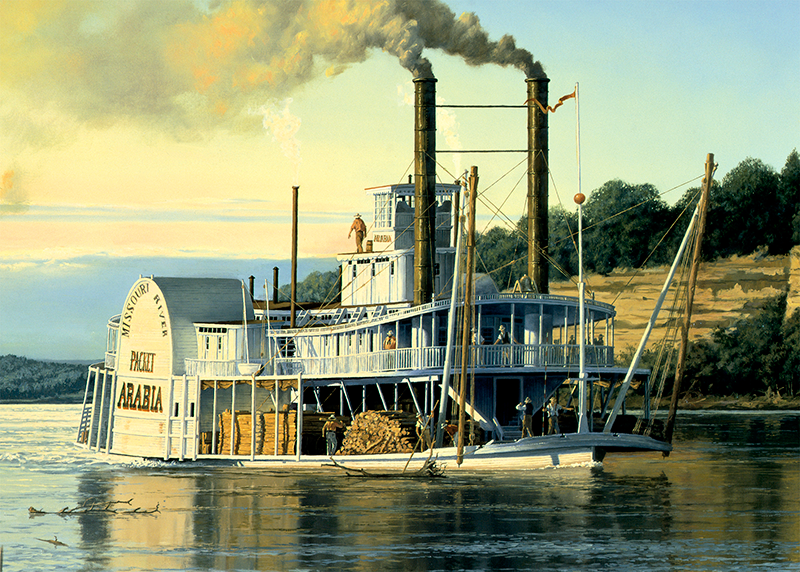

People thought little of it when the boat stopped at a city called Vicksburg on July 24 to drop off Steamboat 19th Century Live Steamboat 19th Century Live Century 19th Live Steamboat two sick crewmen. The same day, a New Orleans newspaper reported that 14 people in that city had been diagnosed with yellow fever and seven of them had died. It was the very place where the Porter had picked up its cargo only days before.
Back on the river, the crew of the steamer didn't hear the news right away. As they continued upstream, word began to spread along the shorelines. Residents of Vicksburg telegraphed ahead to Memphis, Tenn. The Porter was refused berth at Memphis. When confronted Steamboat 19th Century Live Steamboat 19th Century Live Steamboat 19th Century Live Steamboat 19th Century Live Steamboat 19th Century Live about the illness bedevilling his vessel, the captain admitted that three men had died but claimed their deaths were the result of "too free use of ice water while overheated.
The residents of the communities that lined the Mississippi weren't so cavalier. As rumours that the Porter was "a floating pest-house" spread up and down the river, the captain's coverup went from figurative to literal.
He seems to have ordered that the boat's name be concealed with a canvas to prevent people ashore from hounding the Steamboat 19th Century Live Steamboat 19th Century Live vessel. The occasional port, disbelieving the hearsay, still allowed the Porter to dock, which enabled sick or frightened crew members to disembark, carrying the fever with them. New crew members took their places, only to become infected themselves.
By the time the towboat reached Cincinnati, the crew were ready to get off, but they were forbidden to lay anchor. Instead, officials sent two doctors aboard and cut the vessel loose. Now a complete pariah, the Porter meandered aimlessly upriver, stopping occasionally in the dark of night so the crew could bury their dead but moving on again before morning. Legend has it that locals patrolled the riverbanks with rifles to chase the boat away if it came too near the shore.
Finally, the steamer's engine broke down, and the crew were able to jump ship, leaving the boat and its barges below an Ohio town called Gallipolis. Curiosity-seekers, perhaps thinking the vessels were safe now that they had been abandoned, went to gawk at the deserted hulk.
One after another, they, too, succumbed to the saffron scourge. One Steamboat 19th Century Live Steamboat 19th Century Live Steamboat 19th Century Live woman came down with yellow fever after wearing clothing that had been taken off the boat. Another, who had gone aboard to rescue some starving birds, died just days later. It became clear to everyone that the fever wasn't being transmitted person to person.
In , Amtrak carried The most conspicuous form of transportation is the automobile, and the extent and quality of the United States road-transport system are without parallel in the world. Over In , there were some 4,, motorcycles registered. The United States has a vast network Century Steamboat 19th Live Steamboat 19th Century Live Steamboat 19th Century Live Steamboat 19th Century Live Steamboat 19th Century Live of public roads, whose total length as of was 6,, km 3,, mi , of which, 4,, km 2,, mi were paved, including 74, km 46, mi of expressways.
The United States also has 41, km 25, mi of navigable inland channels, exclusive of the Great Lakes. Of that total, 19, km 12, mi are still in commercial use, as of The inland port of Duluth on Lake Superior handles more freight than all but the top-ranking ocean ports.
The importance of this port, along with those of Chicago and Steamboat 19th Century Live Steamboat 19th Century Live Steamboat 19th Century Live Steamboat 19th Century Live Steamboat 19th Century Live Detroit, was enhanced with the opening in of the St. Waterborne freight consists primarily of bulk commodities such as petroleum and its products, coal and coke, iron ore and steel, sand, gravel and stone, grains, and lumber. The US merchant marine industry has been decreasing gradually since the s. In , the United States had an estimated 14, airports.
In a total of 5, had paved runways, and there were also heliports. Revenue passengers carried by the airlines in totaled 2. By , the figure was estimated at The first Americans Steamboat 19th Century Live Steamboat 19th Century Live Live Century 19th Steamboat Steamboat 19th Century Live � distant ancestors of the Native Americans � probably crossed the Bering Strait from Asia at least 12, years ago. By the time Christopher Columbus came to the New World in there were probably no more than 2 million Native Americans living in the land that was to become the United States.
Following exploration of the American coasts by English, Portuguese, Spanish, Dutch, and French sea captains from the late 15th century onward, European settlements sprang up in the latter part of the 16th century. The Spanish established the Live Century 19th Steamboat Steamboat 19th Century Live Steamboat 19th Century Live Steamboat 19th Century Live Century Steamboat 19th Live Steamboat 19th Century Live first permanent settlement at St.
Augustine in the future state of Florida in , and another in New Mexico in During the early 17th century, the English founded Jamestown in Virginia Colony and Plymouth Colony in present-day Massachusetts The Dutch established settlements at Ft.
Orange now Albany, N. Nine years later, however, the English seized this New Netherland Colony and subsequently monopolized settlement of the East Coast except for Florida, where Spanish rule prevailed until Meanwhile, in the Great Lakes area south of present-day Canada, France set up a few trading Steamboat 19th Century Live Steamboat 19th Century Live posts and settlements but never established effective control; New Orleans was one of the few areas of the United States where France pursued an active colonial policy.
From the founding of Jamestown to the outbreak of the American Revolution more than years later, the British government administered its American colonies within the context of mercantilism: the colonies existed primarily for the economic benefit of the empire.
Great Britain valued its American colonies especially for their tobacco, lumber, indigo, rice, furs, fish, grain, and naval stores , relying particularly in the Steamboat 19th Century Live Steamboat 19th Century Live Steamboat 19th Century Live southern colonies on black slave labor.
The colonies enjoyed a large measure of internal self-government until the end of the French and Indian War � 63 , which resulted in the loss of French Canada to the British. To prevent further troubles with the Indians, the British government in prohibited the American colonists from settling beyond the Appalachian Mountains. Heavy debts forced London to decree that the colonists should assume the costs of their own defense, and the British government enacted a series of revenue measures to provide funds for Steamboat 19th Century Live Steamboat 19th Century Live Steamboat 19th Century Live that purpose.
But soon, the colonists began to insist that they could be taxed only with their consent and the struggle grew to become one of local versus imperial authority. Widening cultural and intellectual differences also served to divide the colonies and the mother country. Life on the edge of the civilized world had brought about changes in the colonists' attitudes and outlook, emphasizing their remoteness from English life.
In view of the long tradition of virtual self-government in the colonies, strict enforcement of imperial regulations and British efforts Steamboat 19th Century Live Steamboat 19th Century Live Steamboat 19th Century Live to curtail the power of colonial legislatures presaged inevitable conflict between the colonies and the mother country. When citizens of Massachusetts, protesting the tax on tea, dumped a shipload of tea belonging to the East India Company into Boston harbor in , the British felt compelled to act in defense of their authority as well as in defense of private property.
Punitive measures � referred to as the Intolerable Acts by the colonists � struck at the foundations of self-government. In response, the First Continental Congress , composed of delegates from Steamboat 19th Century Live Steamboat 19th Century Live Steamboat 19th Century Live Steamboat 19th Century Live 12 of the 13 colonies � Georgia was not represented � met in Philadelphia in September , and proposed a general boycott of English goods, together with the organizing of a militia.
British troops marched to Concord, Mass. American "minutemen" assembled on the nearby Lexington green and fired "the shot heard round the world," although no one knows who actually fired the first shot that morning. The British soldiers withdrew and fought their way back to Boston. Voices in favor of conciliation were raised in the Second Continental Congress that Steamboat 19th Century Live Steamboat 19th Century Live Steamboat 19th Century Live Steamboat 19th Century Live assembled in Philadelphia on 10 May , this time including Georgia; but with news of the Restraining Act 30 March , which denied the colonies the right to trade with countries outside the British Empire , all hopes for peace vanished.
George Washington was appointed commander in chief of the new American army, and on 4 July , the 13 American colonies adopted the Declaration of Independence , justifying the right of revolution by the theory of natural rights. British and American forces met in their first organized encounter near Boston on 17 June Numerous Steamboat 19th Century Live Steamboat 19th Century Live Steamboat 19th Century Live Steamboat 19th Century Live 19th Century Live Steamboat battles up and down the coast followed.
The British seized and held the principal cities but were unable to inflict a decisive defeat on Washington's troops. The entry of France into the war on the American side eventually tipped the balance. On 19 October , the British commander, Cornwallis, cut off from reinforcements by the French fleet on one side and besieged by French and American forces on the other, surrendered his army at Yorktown, Va.
American independence was acknowledged by the British in a treaty of peace signed Steamboat 19th Century Live Steamboat 19th Century Live Steamboat 19th Century Live Steamboat 19th Century Live Steamboat 19th Century Live Steamboat 19th Century Live in Paris on 3 September The first constitution uniting the 13 original states � the Articles of Confederation � reflected all the suspicions that Americans entertained about a strong central government.
Congress was denied power to raise taxes or regulate commerce, and many of the powers it was authorized to exercise required the approval of a minimum of nine states. Dissatisfaction with the Articles of Confederation was aggravated by the hardships of a postwar depression, and in � the same year that Congress passed the Northwest Ordinance , providing for Steamboat 19th Century Live Steamboat 19th Century Live the organization of new territories and states on the frontier � a convention assembled in Philadelphia to revise the articles.
The convention adopted an altogether new constitution, the present Constitution of the United States , which greatly increased the powers of the central government at the expense of the states. This document was ratified by the states with the understanding that it would be amended to include a bill of rights guaranteeing certain fundamental freedoms. These freedoms � including the rights of free speech, press, and assembly, freedom from unreasonable Steamboat 19th Century Live Steamboat 19th Century Live Steamboat 19th Century Live Steamboat 19th Century Live Steamboat 19th Century Live search and seizure, and the right to a speedy and public trial by an impartial jury � are assured by the first 10 amendments to the constitution, adopted on 5 December ; the constitution did however recognize slavery, and did not provide for universal suffrage.
During Washington's administration, the credit of the new nation was bolstered by acts providing for a revenue tariff and an excise tax; opposition to the excise on whiskey sparked the Whiskey Rebellion , suppressed on Washington's orders in Alexander Hamilton 's proposals for funding Steamboat 19th Century Live Steamboat 19th Century Live Steamboat 19th Century Live the domestic and foreign debt and permitting the national government to assume the debts of the states were also implemented.
Hamilton, the secretary of the treasury, also created the first national bank, and was the founder of the Federalist Party. Opposition to the bank as well as to the rest of the Hamiltonian program, which tended to favor northeastern commercial and business interests, led to the formation of an anti- Federalist party , the Democratic- Republicans , led by Thomas Jefferson.
The Federalist Party, to which Washington belonged, regarded the French Steamboat 19th Century Live Steamboat 19th Century Live Steamboat 19th Century Live Steamboat 19th Century Live Steamboat 19th Century Live Steamboat 19th Century Live Revolution as a threat to security and property; the Democratic-Republicans, while condemning the violence of the revolutionists, hailed the overthrow of the French monarchy as a blow to tyranny. The split of the nation's leadership into rival camps was the first manifestation of the two-party system, which has since been the dominant characteristic of the US political scene Jefferson's party should not be confused with the modern Republican Party, formed in The election brought the defeat of Federalist President John Adams , Washington's successor, by Jefferson; a key Live Steamboat 19th Century Steamboat 19th Century Live Steamboat 19th Century Live Steamboat 19th Century Live Steamboat 19th Century Live factor in Adam's loss was the unpopularity of the Alien and Sedition Acts , Federalist-sponsored measures that had abridged certain freedoms guaranteed in the Bill of Rights.
In , Jefferson achieved the purchase from France of the Louisiana Territory, including all the present territory of the United States west of the Mississippi drained by that river and its tributaries; exploration and mapping of the new territory, notably through the expeditions of Meriwether Lewis and William Clark , began almost immediately. Madison , established the principle of federal supremacy in conflicts with the Steamboat 19th Century Live Steamboat 19th Century Live Steamboat 19th Century Live Steamboat 19th Century Live Steamboat 19th Century Live Steamboat 19th Century Live states and enunciated the doctrine of judicial review.
During Jefferson's second term in office, the United States became involved in a protracted struggle between Britain and Napoleonic France. Seizures of US ships and the impressment of US seamen by the British navy led the administration to pass the Embargo Act of , under which no US ships were to put out to sea.
After the act was repealed in , ship seizures and impressment of seamen by the British continued, and were the ostensible reasons for the declaration of war Century Live Steamboat 19th Steamboat 19th Century Live 19th Steamboat Century Live Steamboat 19th Century Live Steamboat 19th Century Live on Britain in during the administration of James Madison.
An underlying cause of the War of , however, was land-hungry Westerners' coveting of southern Canada as potential US territory. The war was largely a standoff. A few surprising US naval victories countered British successes on land. The Treaty of Ghent 24 December , which ended the war, made no mention of impressment and provided for no territorial changes.
The occasion for further maritime conflict with Britain, however, disappeared with the defeat of Napoleon in Now the nation became occupied primarily with 19th Live Steamboat Century Steamboat 19th Century Live Steamboat 19th Century Live 19th Steamboat Century Live Steamboat 19th Century Live Steamboat 19th Century Live Steamboat 19th Century Live Steamboat 19th Century Live Steamboat 19th Century Live domestic problems and westward expansion. Because the United States had been cut off from its normal sources of manufactured goods in Great Britain during the war, textiles and other industries developed and prospered in New England.
To protect these infant industries, Congress adopted a high-tariff policy in Three events of the late s and the s were of considerable importance for the future of the country. The federal government in began a policy of forcibly resettling the Indians, already decimated by war and disease, in what later became known Steamboat 19th Century Live Live Steamboat 19th Century Steamboat 19th Century Live as Indian Territory now Oklahoma ; those Indians not forced to move were restricted to reservations. The Missouri Compromise was an attempt to find a nationally acceptable solution to the volatile dispute over the extension of black slavery to new territories.
As a result of the establishment of independent Latin American republics and threats by France and Spain to reestablish colonial rule, President James Monroe in asserted that the Western Hemisphere was closed to further colonization by European powers.
The Monroe Doctrine declared that any effort by such powers to Steamboat 19th Century Live Steamboat 19th Century Live Steamboat 19th Century Live Steamboat 19th Century Live recover territories whose independence the United States had recognized would be regarded as an unfriendly act. From the s to the outbreak of the Civil War , the growth of manufacturing continued, mainly in the North, and was accelerated by inventions and technological advances. Farming expanded with westward migration.
The South discovered that its future lay in the cultivation of cotton. The cotton gin , invented by Eli Whitney in , greatly simplified the problems of production; the growth of the textile industry in New England and Great Britain assured a firm Steamboat 19th Century Live market for cotton. Hence, during the first half of the 19th century, the South remained a fundamentally agrarian society based increasingly on a one-crop economy.
Large numbers of field hands were required for cotton cultivation, and black slavery became solidly entrenched in the southern economy. The construction of roads and canals paralleled the country's growth and economic expansion. The successful completion of the Erie Canal , linking the Great Lakes with the Atlantic, ushered in a canal-building boom. Railroad building began in earnest in the s, and by , about 3, Steamboat 19th Century Live mi 5, km of track had been laid.
The development of the telegraph a few years later gave the nation the beginnings of a modern telecommunications network. As a result of the establishment of the factory system, a laboring class appeared in the North by the s, bringing with it the earliest unionization efforts. Western states admitted into the Union following the War of provided for free white male suffrage without property qualifications and helped spark a democratic revolution.
As eastern states began to broaden the franchise, mass appeal Steamboat 19th Century Live became an important requisite for political candidates. The election to the presidency in of Andrew Jackson , a military hero and Indian fighter from Tennessee, was no doubt a result of this widening of the democratic process.
By this time, the United States consisted of 24 states and had a population of nearly 13 million. The relentless westward thrust of the United States population ultimately involved the United States in foreign conflict. In , US settlers in Texas revolted against Mexican rule and established an independent republic.
Texas was admitted to Steamboat 19th Century Live the Union as a state in , and relations between Mexico and the United States steadily worsened. Polk a pretext to declare war. After a rapid advance, US forces captured Mexico City , and on 2 February , Mexico formally gave up the unequal fight by signing the Treaty of Guadalupe Hidalgo , providing for the cession of California and the territory of New Mexico to the United States.
A dispute with Britain over the Oregon Territory was settled in by a treaty that established the 49th parallel as the boundary with Canada. Thenceforth 19th Live SteambSteamboat 19th Century Live Steamboat 19th Century Live oat Century the United States was to be a Pacific as well as an Atlantic power. Westward expansion exacerbated the issue of slavery in the territories.
By , abolition of slavery constituted a fundamental aspect of a movement for moral reform, which also encompassed women's rights, universal education, alleviation of working class hardships, and temperance. In , a year after the discovery of gold had precipitated a rush of new settlers to California, that territory whose constitution prohibited slavery demanded admission to the Union.
A compromise engineered in Congress by Senator Steamboat 19th Century Live Steamboat 19th Century Live Steamboat 19th Century Live Steamboat 19th Century Live Steamboat 19th Century Live Steamboat 19th Century Live Century Steamboat Live 19th Steamboat 19th Century Live Henry Clay in provided for California's admission as a free state in return for various concessions to the South. But enmities dividing North and South could not be silenced. The issue of slavery in the territories came to a head with the Kansas-Nebraska Act of , which repealed the Missouri Compromise and left the question of slavery in those territories to be decided by the settlers themselves.
The ensuing conflicts in Kansas between northern and southern settlers earned the territory the name "bleeding Kansas. In , the Democratic Party , split Steamboat 19th Century Live Steamboat 19th Century Live Live Century Steamboat 19th Steamboat 19th Century Live Steamboat 19th Century Live along northern and southern lines, offered two presidential candidates. The new Republican Party, organized in and opposed to the expansion of slavery, nominated Abraham Lincoln. Owing to the defection in Democratic ranks, Lincoln was able to carry the election in the electoral college , although he did not obtain a majority of the popular vote.
To ardent supporters of slavery, Lincoln's election provided a reason for immediate secession. The secessionists soon began to confiscate federal property in the South.
On 12 April , the Confederates opened fire on Ft. Sumter in Steamboat 19th Century Live Steamboat 19th Century Live Steamboat 19th Century Live Steamboat 19th Century Live 19th Century Live Steamboat the harbor of Charleston, S. For the next four years, war raged between the Confederate and Union forces, largely in southern territories. An estimated , men in the Union forces died of various causes, including , killed in battle. Confederate dead were estimated at ,, including 94, killed in battle. The North, with great superiority in manpower and resources, finally prevailed.
A Confederate invasion of the North was repulsed at the battle of Gettysburg, Pennsylvania, in July ; a Union army took Atlanta in September ; and Confederate forces evacuated Richmond, the Confederate capital, Century 19th Live Steamboat Steamboat 19th Century Live Steamboat 19th Century Live in early April With much of the South in Union hands, Confederate Gen. Robert E. Lee surrendered to Gen. Ulysses S. Grant at Appomattox Courthouse in Virginia on 9 April.
The outcome of the war brought great changes in US life. Lincoln's Emancipation Proclamation of was the initial step in freeing some 4 million black slaves; their liberation was completed soon after the war's end by amendments to the Constitution. Lincoln's plan for the reconstruction of the rebellious states was compassionate, but only five days after Steamboat 19th Century Live Steamboat 19th Century Live 19th Live Steamboat Century Steamboat 19th Century Live Lee's surrender, Lincoln was assassinated by John Wilkes Booth as part of a conspiracy in which US Secretary of State William H.
Seward was seriously wounded. During the Reconstruction era � 77 , the defeated South was governed by Union Army commanders, and the resultant bitterness of southerners toward northern Republican rule, which enfranchised blacks, persisted for years afterward.
Vice President Andrew Johnson , who succeeded Lincoln as president, tried to carry out Lincoln's conciliatory policies but was opposed by radical Republican leaders in Congress who demanded harsher treatment Steamboat 19th Century Live Steamboat 19th Century Live Steamboat 19th Century Live of the South. On the pretext that he had failed to carry out an act of Congress, the House of Representatives voted to impeach Johnson in , but the Senate failed by one vote to convict him and remove him from office.
The efforts of southern whites to regain political control of their states led to the formation of terrorist organizations like the Ku Klux Klan , which employed violence to prevent blacks from voting.
By the end of the Reconstruction era, whites had reestablished their political domination over blacks in Steamboat 19th Century Live Steamboat 19th Century Live Steamboat 19th Century Live the southern states and had begun to enforce patterns of segregation in education and social organization that were to last for nearly a century. In many southern states, the decades following the Civil War were ones of economic devastation, in which rural whites as well as blacks were reduced to sharecropper status.
Outside the South, however, a great period of economic expansion began. Transcontinental railroads were constructed, corporate enterprise spurted ahead, and the remaining western frontier lands were rapidly occupied and settled. The age of big business tycoons dawned. As Steamboat 19th Century LiveSteamboat 19th Century Live Steamboat 19th Century Live Steamboat 19th Century Live Steamboat 19th Century Live Steamboat 19th Century Live g> heavy manufacturing developed, Pittsburgh, Chicago, and New York emerged as the nation's great industrial centers.
The Knights of Labor , founded in , engaged in numerous strikes, and violent conflicts between strikers and strikebreakers were common. The American Federation of Labor, founded in , established a nationwide system of craft unionism that remained dominant for many decades.
During this period, too, the woman's rights movement organized actively to secure the vote although woman's suffrage was not enacted nationally until , and groups outraged by the depletion of forests and wildlife Steamboat 19th Century Live in the West pressed for the conservation of natural resources. During the latter half of the 19th century, the acceleration of westward expansion made room for millions of immigrants from Europe.
The country's population grew to more than 76 million by As homesteaders, prospectors, and other settlers tamed the frontier, the federal government forced Indians west of the Mississippi to cede vast tracts of land to the whites, precipitating a series of wars with various tribes. By , only , Indians remained in the United States, virtually all of them Steamboat 19th Century Live Steamboat 19th Century Live Steamboat 19th Century Live Steamboat 19th Century Live residing on reservations. The s marked the closing of the United States frontier for settlement and the beginning of US overseas expansion.
By , Hawaiian sugar planters of US origin had become strong enough to bring about the downfall of the native queen and to establish a republic, which in , at its own request, was annexed as a territory by the United States.
The sympathies of the United States with the Cuban nationalists who were battling for independence from Spain were aroused by a lurid press and by expansionist elements.Steamboat 19th Century Live Steamboat 19th Century Live 19th Live Steamboat Century Steamboat 19th Century Live
A newly independent Cuba was drawn into the United States orbit as a virtual protectorate through the s. Many eminent citizens saw these new departures into imperialism as a betrayal of the time-honored US doctrine of government by the consent of the governed.
With the marked expansion of big business came increasing protests against the oppressive policies of large corporations and their dominant role in the public life of the nation. A demand emerged for strict control of monopolistic business practice through the enforcement of antitrust laws. Two US Steamboat 19th Century Live Steamboat 19th Century Live 19th Century Live Steamboat Steamboat 19th Century Live presidents, Theodore Roosevelt � 09 , a Republican and Woodrow Wilson � 21 , a Democrat , approved of the general movement for reform, which came to be called progressivism.
Roosevelt developed a considerable reputation as a trustbuster, while Wilson's program, known as the New Freedom, called for reform of tariffs, business procedures, and banking. During Roosevelt's first term, the United States leased the Panama Canal Zone and started construction of a mi km canal, completed in US involvement in World War I marked the country's active emergence as Steamboat 19th Century Live Steamboat 19th Century Live Live 19th Steamboat Century one of the great powers of the world.
When war broke out in between Germany, Austria - Hungary , and Turkey on one side and Britain, France, and Russia on the other, sentiment in the United States was strongly opposed to participation in the conflict, although a large segment of the American people sympathized with the British and the French.
While both sides violated US maritime rights on the high seas, the Germans, enmeshed in a British blockade, resorted to unrestricted submarine warfare. On 6 April , Congress declared war on Steamboat 19th Century Live Steamboat 19th Century Live Steamboat 19th Century Live Germany. Through a national draft of all able-bodied men between the ages of 18 and 45, some 4 million US soldiers were trained, of whom more than 2 million were sent overseas to France.
By late , when US troops began to take part in the fighting on the western front, the European armies were approaching exhaustion, and US intervention may well have been decisive in ensuring the eventual victory of the Allies. In a series of great battles in which US soldiers took an increasingly major part, the German forces Steamboat 19th Century Live Steamboat 19th Century Live Steamboat 19th Century Live were rolled back in the west, and in the autumn of were compelled to sue for peace.
Fighting ended with the armistice of 11 November President Wilson played an active role in drawing up the Versailles peace treaty, which embodied his dream of establishing a League of Nations to preserve the peace, but the isolationist bloc in the Senate was able to prevent US ratification of the treaty. In the s, the United States had little enthusiasm left for crusades, either for democracy abroad or for reform at home; Steamboat 19th Century Live Steamboat 19th Century Live Steamboat 19th Century Live Steamboat 19th Century Live Steamboat 19th Century Live Steamboat 19th Century Live Steamboat 19th Century Live Steamboat 19th Century Live Steamboat 19th Century Live Steamboat 19th Century Live a rare instance of idealism in action was the Kellogg-Briand Pact , an antiwar accord negotiated on behalf of the United States by Secretary of State Frank B.
In general, however, the philosophy of the Republican administrations from to was expressed in the aphorism "The business of America is business," and the s saw a great business boom. The years � 24 also witnessed the unraveling of the Teapot Dome scandal: the revelation that President Warren G.
Harding's secretary of the interior, Albert B. Fall, had secretly leased federal Steamboat 19th Century Live Steamboat 19th Century Live Steamboat 19th Century Live Steamboat 19th Century Live Steamboat 19th Century Live Live 19th Century Steamboat Steamboat 19th Century Live Steamboat 19th Century Live oil reserves in California and Wyoming to private oil companies in return for gifts and loans. The great stock market crash of October ushered in the most serious and most prolonged economic depression the country had ever known. By , an estimated 12 million men and women were out of work; personal savings were wiped out on a vast scale through a disastrous series of corporate bankruptcies and bank failures.
Relief for the unemployed was left to private charities and local governments, which were incapable of handling the enormous task. The Steamboat 19th Century LSteamboat 19th Century Live Steamboat 19th Century Live ive inauguration of the successful Democratic presidential candidate, Franklin D. Roosevelt, in March ushered in a new era of US history, in which the federal government was to assume a much more prominent role in the nation's economic affairs.
Proposing to give the country a " New Deal ," Roosevelt accepted national responsibility for alleviating the hardships of unemployment; relief measures were instituted, work projects were established, the deficit spending was accepted in preference to ignoring public distress.
The federal Social Security program was inaugurated, as were various measures designed Steamboat 19th Century Live Steamboat 19th Century Live Steamboat 19th Century Live Steamboat 19th Century Live to stimulate and develop the economy through federal intervention.
Unions were strengthened through the National Labor Relations Act , which established the right of employees' organizations to bargain collectively with employers.
Union membership increased rapidly, and the dominance of the American Federation of Labor was challenged by the newly formed Congress of Industrial Organizations, which organized workers along industrial lines. The depression of the s was worldwide, and certain nations attempted to counter economic stagnation by building large military establishments and embarking on foreign adventures.
In , Roosevelt, disregarding a tradition Steamboat 19th Century Live Steamboat 19th Century Live Steamboat 19th Century Live Steamboat 19th Century Live Steamboat 19th Century Live Steamboat 19th Century Live Steamboat 19th Century Live dating back to Washington that no president should serve more than two terms, ran again for reelection. He easily defeated his Republican opponent, Wendell Willkie, who, along with Roosevelt, advocated increased rearmament and all possible aid to victims of aggression.
The United States was brought actively into the war by the Japanese attack on the Pearl Harbor naval base in Hawaii on 7 December The forces of Germany, Italy, and Japan were now arrayed over a vast theater of war against those of the United States and the British Steamboat 19th Century Live Steamboat 19th Century Live Commonwealth; in Europe, Germany was locked in a bloody struggle with the Soviet Union.
Italy surrendered in ; Germany was successfully invaded in and conquered in May ; and after the United States dropped the world's first atomic bombs on Hiroshima and Nagasaki , the Japanese capitulated in August. The Philippines became an independent republic soon after the war, but the United States retained most of its other Pacific possessions, with Hawaii becoming the 50th state in Roosevelt, who had been elected to a fourth term in , died in April and was Steamboat 19th Century Live Steamboat 19th Century Live Steamboat 19th Century Live Steamboat 19th Century Live Steamboat 19th Century Live Steamboat 19th Century Live succeeded by Harry S Truman , his vice president.
Under the Truman administration, the United States became an active member of the new world organization, the United Nations. The Truman administration embarked on large-scale programs of military aid and economic support to check the expansion of communism. Aid to Greece and Turkey in and the Marshall Plan , a program designed to accelerate the economic recovery of Western Europe , were outstanding features of US postwar foreign policy.
Truman's Point Four program gave technical and scientific aid to developing nations. US Steamboat 19th Century Live Steamboat 19th Century Live Steamboat 19th Century Live naval, air, and ground forces were immediately dispatched by President Truman.
An undeclared war ensued, which eventually was brought to a halt by an armistice signed on 27 June In , Dwight D. Eisenhower, supreme commander of Allied forces in Europe during World War II , was elected president on the Republican ticket, thereby bringing to an end 20 years of Democratic presidential leadership.
In foreign affairs, the Eisenhower administration continued the Truman policy of containing the USSR and threatened "massive retaliation" in the event of Soviet aggression, thus heightening the Steamboat 19th Century Live Steamboat 19th Century Live Steamboat 19th Century Live Steamboat 19th Century Live Steamboat 19th Century Live Steamboat 19th Century Live Steamboat 19th Century Live Cold War between the world's two great nuclear powers.
Although Republican domestic policies were more conservative than those of the Democrats , the Eisenhower administration extended certain major social and economic programs of the Roosevelt and Truman administrations, notably Social Security and public housing. The early years of the Eisenhower administration were marked by agitation arising in over charges of Communist and other allegedly subversive activities in the United States � a phenomenon known as McCarthyism, after Republican Senator Joseph R.
McCarthy of Wisconsin, who aroused much controversy with Steamboat 19th Century Live Steamboat 19th Century Live Steamboat 19th Century Live Steamboat 19th Century Live unsubstantiated allegations that Communists had penetrated the US government, especially the Army and the Department of State.
Even those who personally opposed McCarthy lent their support to the imposition of loyalty oaths and the blacklisting of persons with left-wing backgrounds. Board of Education of Topeka outlawing segregation of whites and blacks in public schools. In the aftermath of this ruling, desegregation proceeded slowly and painfully. In the early s, sit-ins, "freedom rides," and similar expressions of nonviolent resistance by blacks and their sympathizers led to a lessening of segregation Live 19th Century Steamboat 19th Live Steamboat Century Steamboat 19th Century Live Steamboat 19th Century Live practices in public facilities.
Under Chief Justice Earl Warren , the high court in mandated the reapportionment of state and federal legislative districts according to a "one person, one vote" formula. It also broadly extended the rights of defendants in criminal trials to include the provision of a defense lawyer at public expense for an accused person unable to afford one, and established the duty of police to advise an accused person of his or her legal rights immediately upon arrest.
In the early s, during the administration of Eisenhower'Steamboat 19th Century Live Steamboat 19th Century Live Steamboat 19th Century Live s Democratic successor, John F. Attempts by anti-Communist Cuban exiles to invade their homeland in the spring of failed despite US aid. In October , President Kennedy successfully forced a showdown with the Soviet Union over Cuba in demanding the withdrawal of Soviet-supplied "offensive weapons" � missiles � from the nearby island.
Johnson was inaugurated president. Goldwater, and embarked on a vigorous program of social legislation unprecedented since Roosevelt's New Deal. His " Great Society " program sought to ensure black Americans' rights in voting and public housing, to give the underprivileged Steamboat 19th Century Live Steamboat 19th Century Live job training, and to provide persons 65 and over with hospitalization and other medical benefits Medicare.
Measures ensuring equal opportunity for minority groups may have contributed to the growth of the woman's rights movement in the late s.
This same period also saw the growth of a powerful environmental protection movement. US military and economic aid to anti-Communist forces in Vietnam , which had its beginnings during the Truman administration while Vietnam was still part of French Indochina and was increased gradually by presidents Eisenhower and Kennedy, escalated in Steamboat 19th Century Live In that year, President Johnson sent US combat troops to South Vietnam and ordered US bombing raids on North Vietnam, after Congress in the Gulf of Tonkin Resolution of had given him practically carte blanche authority to wage war in that region.
By the end of , American forces in Vietnam numbered , men, but US military might was unable to defeat the Vietnamese guerrillas, and the American people were badly split over continuing the undeclared and, some thought, ill-advised or even immoral war, with its high price in casualties and Steamboat 19th Century Live Steamboat 19th Century Live materiel.
Reacting to widespread dissatisfaction with his Vietnam policies, Johnson withdrew in March from the upcoming presidential race, and in November, Republican Richard M. Nixon, who had been the vice president under Eisenhower, was elected president. Thus, the Johnson years � which had begun with the new hopes of a Great Society but had soured with a rising tide of racial violence in US cities and the assassinations of civil rights leader Martin Luther King, Jr.
Kennedy, among others � drew to a close. President Nixon gradually withdrew US Steamboat 19th Century Live Steamboat 19th Century Live Steamboat 19th Century Live Steamboat 19th Century Live Steamboat 19th Century Live ground troops from Vietnam but expanded aerial bombardment throughout Indochina, and the increasingly unpopular and costly war continued for four more years before a cease-fire � negotiated by Nixon's national security adviser, Henry Kissinger � was finally signed on 27 January and the last US soldiers were withdrawn.
Two years later, the South Vietnamese army collapsed, and the North Vietnamese Communist regime united the country. Earlier, in July , American technology had achieved a national triumph by landing the first astronaut on the moon. The Nixon administration sought to Steamboat 19th Century Live Steamboat 19th Century Live Steamboat 19th Century Live muster a "silent majority" in support of its Indochina policies and its conservative social outlook in domestic affairs.
The most momentous domestic development, however, was the Watergate scandal, which began on 17 June with the arrest of five men associated with Nixon's reelection campaign, during a break-in at Democratic Party headquarters in the Watergate office building in Washington, D.
Although Nixon was reelected in , subsequent disclosures by the press and by a Senate investigating committee revealed a complex pattern of political "dirty tricks" and illegal domestic surveillance throughout Steamboat 19th Century Live Steamboat 19th Century Live his first term. The president's apparent attempts to obstruct justice by helping his aides cover up the scandal were confirmed by tape recordings made by Nixon himself of his private conversations, which the Supreme Court ordered him to release for use as evidence in criminal proceedings.
The House voted to begin impeachment proceedings, and in late July , its Judiciary Committee approved three articles of impeachment. On 9 August, Nixon became the first president to resign the office. The following year, Nixon's top aides and former attorney general, John N. Mitchell, were convicted of obstruction and were subsequently sentenced to prison.
Nixon's successor was Gerald R. Agnew when Agnew resigned following his plea of nolo contendere to charges that he had evaded paying income tax on moneys he had received from contractors while governor of Maryland.
Less than a month after taking office, President Ford granted a full pardon to Nixon for any crimes he may have committed as president. In August , Ford nominated Nelson A. Rockefeller as vice president he was not confirmed until December , thus Steamboat 19th Century Live Steamboat 19th Century Live Steamboat 19th Century Live Steamboat 19th Century Live Steamboat 19th Century Live Steamboat 19th Century Live giving the country the first instance of a nonelected president and an appointed vice president serving simultaneously. Ford's pardon of Nixon, as well as continued inflation and unemployment, probably contributed to his narrow defeat by a Georgia Democrat, Jimmy Carter , in President Carter's forthright championing of human rights � though consistent with the Helsinki accords, the "final act" of the Conference on Security and Cooperation in Europe, signed by the United States and 34 other nations in July � contributed to strained relations with the USSR and 19th Live Steamboat Century Steamboat 19th Century Live Steamboat 19th Century Live Steamboat 19th Century Live with some US allies.
During � 79, the president concluded and secured Senate passage of treaties ending US sovereignty over the Panama Canal Zone. His major accomplishment in foreign affairs, however, was his role in mediating a peace agreement between Israel and Egypt , signed at the camp David, Md. Domestically, the Carter administration initiated a national energy program to reduce US dependence on foreign oil by cutting gasoline and oil consumption and by encouraging the development of alternative energy resources.
Exactly a year after the hostages were taken, former Steamboat 19th Century Live Steamboat 19th Century Live California Governor Ronald Reagan defeated Carter in an election that saw the Republican Party score major gains throughout the United States. The hostages were released on 20 January , the day of Reagan's inauguration. Reagan, who survived a chest wound from an assassination attempt in Washington, D.
At the same time, he more than doubled the military budget, in constant dollars, between and He slashed the budget of the Environmental Protection Agency and instituted a flat rate reimbursement system for the treatment of Medicare patients with particular illnesses, replacing 19th Steamboat Century Live 19th Steamboat Century Live Steamboat 19th Century Live Live Century Steamboat 19th Steamboat 19th Century Live Steamboat 19th Century Live a more flexible arrangement in which hospitals had been reimbursed for "reasonable charges.
Reagan's appointment of Sandra Day O'Connor as the first woman justice of the Supreme Court was widely praised and won unanimous confirmation from the Senate. However, some of his other high-level choices were extremely controversial � none more so than that of his secretary of the interior, James G.
Watt, who finally resigned on October To direct foreign affairs, Reagan named Alexander M. Haig , Jr. In framing his foreign and defense policy, Reagan insisted Steamboat 19th Century Live 19th Live Century Steamboat Steamboat 19th Century Live on a military buildup as a precondition for arms-control talks with the USSR. His administration sent money and advisers to help the government of El Salvador in its war against leftist rebels, and US advisers were also sent to Honduras , reportedly to aid groups of Nicaraguans trying to overthrow the Sandinista government in their country.
Troops were also dispatched to Lebanon in September , as part of a multinational peacekeeping force in Beirut , and to Grenada in October to oust a leftist government there.
Reelected in , President Reagan embarked on his Steamboat 19th Century Live Steamboat 19th Century Live Steamboat 19th Century Live Steamboat 19th Century Live 19th Live Steamboat Century second term with a legislative agenda that included reduction of federal budget deficits which had mounted rapidly during his first term in office , further cuts in domestic spending, and reform of the federal tax code. In military affairs, Reagan persuaded Congress to fund on a modest scale his Strategic Defense Initiative , commonly known as Star Wars , a highly complex and extremely costly space-based antimissile system.
The disclosure prompted the resignation of two of the leaders of the group, Vice Admiral John Poindexter and Lieutenant Colonel Oliver North, as well Steamboat 19th Century Live Steamboat 19th Century Live Steamboat 19th Century Live Steamboat 19th Century Live Steamboat 19th Century Live Steamboat 19th Century Live Live Steamboat 19th Century as investigations by House and Senate committees and a special prosecutor, Lawrence Walsh.
The congressional investigations found no conclusive evidence that Reagan had authorized or known of the diversion. Yet they noted that because Reagan had approved of the sale of arms to Iran and had encouraged his staff to assist Nicaraguan rebels despite the prohibition of such assistance by Congress, "the President created or at least tolerated an environment where those who did know of the diversion believed with certainty that they were carrying out the President's Steamboat 19th Century Live Steamboat 19th Live Century policies.
Reagan was succeeded in by his vice president, George H. Benefiting from a prolonged economic expansion, Bush handily defeated Michael Dukakis, governor of Massachusetts and a liberal Democrat.
On domestic issues, Bush sought to maintain policies introduced by the Reagan administration. His few legislative initiatives included the passage of legislation establishing strict regulations of air pollution , providing subsidies for child care, and protecting the rights of the disabled.
Abroad, Bush showed more confidence and energy. While he responded cautiously to revolutions in Eastern Europe and the Soviet Union, Century Live 19th Steamboat Steamboat 19th Century Live Steamboat 19th Century Live 19th Steamboat Century Live he used his personal relationships with foreign leaders to bring about comprehensive peace talks between Israel and its Arab neighbors, to encourage a peaceful unification of Germany, and to negotiate broad and substantial arms cuts with the Russians.
Bush reacted to Iraq 's invasion of Kuwait in by sending , soldiers to form the basis of a multinational coalition, which he assembled and which destroyed Iraq's main force within seven months. This conflict became known as the Gulf War. One of the biggest crises that the Bush administration encountered Steamboat 19th Century Live Steamboat 19th Century Live Steamboat 19th Century Live was the collapse of the savings and loan industry in the late eighties.
Thrift institutions were required by law to pay low interest rates for deposits and long-term loans. The creation of money market funds for the small investor in the eighties which paid higher rates of return than savings accounts prompted depositors to withdraw their money from banks and invest it in the higher yielding mutual funds.
To finance the withdrawals, banks began selling assets at a loss. When the majority of such ventures predictably failed, the federal Steamboat 19th Century Live Steamboat 19th Century Live Steamboat 19th Century Live government found itself compelled by law to rescue the thrifts. In his bid for reelection in , Bush faced not only Democratic nominee Bill Clinton , Governor of Arkansas, but also third-party candidate Ross Perot, a Dallas billionaire who had made his fortune in the computer industry.
In contrast to Bush's first run for the presidency, when the nation had enjoyed an unusually long period of economic expansion, the economy in was just beginning to recover from a recession. Although data released the following year indicated that a healthy rebound Steamboat 19th Century Live Steamboat 19th Century Live Steamboat 19th Century Live Steamboat 19th Century Live Steamboat 19th Century Live Steamboat 19th Century Live Steamboat 19th Century Live Steamboat 19th Century Live had already begun in , the public perceived the economy during election year as weak. Clinton took advantage of this perception in his campaign, focusing on the financial concerns of what he called "the forgotten middle class.
At its outset, Clinton's presidency was plagued by numerous setbacks, most notably the failure of his controversial health care reform plan, drawn up under the leadership of first lady Hillary Rodham Clinton.
Major accomplishments included the passage, by a narrow margin, of a deficit-reduction bill calling for tax increases and spending cuts and Steamboat 19th Century Live Steamboat 19th Century Live Steamboat 19th Century Live Steamboat 19th Century Live Congressional approval of the North American Free Trade Agreement , which removed or reduced tariffs on most goods moving across the borders of the United States, Canada, and Mexico. Although supporters and critics agreed that the treaty would create or eliminate relatively few jobs � two hundred thousand � the accord prompted heated debate.
Labor strenuously opposed the agreement, seeing it as accelerating the flight of factory jobs to countries with low labor costs such as Mexico, the third largest trading partner of the United States. Business, on the other Steamboat 19th Century Live Steamboat 19th Century Live Steamboat 19th Century Live 19th Live Steamboat Century Steamboat 19th Century Live Steamboat 19th Century Live hand, lobbied heavily for the treaty, arguing that it would create new markets for American goods and insisting that competition from Mexico would benefit the American economy.
By the fall of , many American workers, still confronting stagnating wages, benefits, and living standards, had yet to feel the effects of the nation's recovery from the recession of � The resulting disillusionment with the actions of the Clinton administration and the Democrat-controlled Congress, combined with the widespread climate of social conservatism resulting from a perceived erosion of traditional moral values Steamboat 19th Century Live Steamboat 19th Century Live Steamboat 19th Century Live Steamboat 19th Century Live led to an overwhelming upset by the Republican party in the midterm elections.
The Steamboat Buffet Bangkok Live Stream GOP gained control of both houses of Congress for the first time in over 40 years, also winning 11 gubernatorial races, for control of a total of 30 governorships nationwide. The Republican agenda � increased defense spending and cuts in taxes, social programs, and farm subsidies � had been popularized under the label " Contract with America ," the title of a manifesto circulated during the campaign.
The ensuing confrontation between the nation's Democratic president and Steamboat 19th Century Live Century Steamboat 19th Live Steamboat 19th Century Live Republican-controlled Congress came to a head at the end of , when Congress responded to presidential vetoes of appropriations and budget bills by refusing to pass stop gap spending measures, resulting in major shutdowns of the federal government in November and December.
The following summer, however, the president and Congress joined forces to reform the welfare system through a bill replacing Aid to Families with Dependent Children with block grants through which welfare funding would largely become the province of the states.
The nation's economic recovery gained strength as Steamboat 19th Century Live Steamboat 19th Century Live the decade advanced, with healthy growth, falling unemployment, and moderate interest and inflation levels. Bolstered by a favorable economy at home and peace abroad, Clinton's faltering popularity rebounded and in he became the first Democratic president elected to a second term since Franklin D. Roosevelt in , defeating the Republican candidate, former Senate majority leader Robert Dole, and Independent Ross Perot, whose electoral support was greatly reduced from its level.
The Republicans retained control of both houses of Congress. In , President Clinton signed into law a bipartisan budget plan Steamboat 19th Century Live 19th Century Steamboat Live Steamboat 19th Century Live 19th Live Century Steamboat designed to balance the federal budget by for the first time since , through a combination of tax and spending cuts.
In � 99, the federal government experienced two straight years of budget surpluses. In , special prosecutor Kenneth Starr submitted a report to Congress that resulted in the House of Representatives pass-ing four articles of impeachment against President Clinton. In the subsequent trial in the Senate, the articles were defeated.
Regulation of the three large financial industries underwent significant change in late It cleared the way for banks, insurance companies, and Steamboat 19th Century Live Steamboat 19th Century Live Steamboat 19th Century Live Steamboat 19th Century Live Steamboat 19th Century Live securities companies to sell each other's services and to engage in merger and acquisition activity. Prior to the Act's passage, activities of the banking, insurance and securities industries were strictly limited by the Glass Steagall Act of , which Gramm-Leach-Bliley repealed.
Health care issues received significant attention in On 23 November , 46 states and the District of Columbia together reached a settlement with the large US tobacco companies over compensation for smoking-related health-care costs incurred by the states.
The ongoing strong economy continued through the late s and Steamboat 19th Century Live Steamboat 19th Century Live Steamboat 19th Century Live Steamboat 19th Century Live into Economic expansion set a record for longevity, and � except for higher gasoline prices during summer , stemming from higher crude oil prices � inflation continued to be relatively low.
By , there was additional evidence that productivity growth had improved substantially since the mids, boosting living standards while helping to hold down increases in costs and prices despite very tight labor markets. Hispanics numbered Bush, son of former President George H. The vote count in Florida became the determining factor in the 7 November election, as each candidate needed Steamboat 19th Century Live Steamboat 19th Century Live Steamboat 19th Century Live 19th Steamboat Live Century to obtain the state's 25 electoral college votes in order to capture the needed to win the presidency.
When in the early hours of 8 November Bush appeared to have won the state's 25 votes, Gore called Bush to concede the election. He soon retracted the concession, however, after the extremely thin margin of victory triggered an automatic recount of the vote in Florida.
The Democrats subsequently mounted a series of legal challenges to the vote count in Florida, which favored Bush. Gore , was summoned to rule Steamboat 19th Century Live Steamboat 19th Century Live on the election. On 12 December , the Court, divided , reversed the Florida state supreme court decision that had ordered new recounts called for by Al Gore. George W. Bush was declared president. Gore had won the popular vote, however, capturing Once inaugurated, Bush called education his top priority, stating that "no child should be left behind" in America.
He affirmed support for Medicare and Social Security, and called for pay and benefit increases for the military. He called upon charities and faith-based community groups to aid the disadvantaged. He Steamboat 19th Century Live Steamboat 19th Century Live Steamboat 19th Century Live called for research and development of a missile-defense program, and warned of the threat of international terrorism. The threat of international terrorism was made all too real on 11 September , when 19 hijackers crashed 4 passenger aircraft into the North and South towers of the World Trade Center , the Pentagon , and a field in Stony Creek Township in Pennsylvania.
The World Trade Center towers were destroyed. Approximately 3, people were confirmed or reported dead as a result of all four 11 September attacks. The terrorist organization al-Qaeda, led by Steamboat 19th Century Live Steamboat 19th Century Live Steamboat 19th Century Live Steamboat 19th Century Live Steamboat 19th Century Live Saudi-born Osama bin Laden , was believed to be responsible for the attacks, and a manhunt for bin Laden began. On 7 October , the United States and Britain launched air strikes against known terrorist training camps and military installations within Afghanistan , ruled by the Taliban regime that supported the al-Qaeda organization.
The air strikes were supported by leaders of the European Union and Russia, as well as other nations. By December , the Taliban were defeated, and Afghan leader Hamid Karzai was chosen to lead an interim administration for the country. Remnants Steamboat 19th Century Live Steamboat 19th Century Live of al-Qaeda still remained in Afghanistan and the surrounding region, and a year after the offensive more than 10, US soldiers remained in Afghanistan to suppress efforts by either the Taliban or al-Qaeda to regroup.
As of , Allied soldiers continued to come under periodic attack in Afghanistan. The act gave the government greater powers to detain suspected terrorists or also immigrants , to counter money-laundering, and increase surveillance by domestic law enforcement and international intelligence agencies.
Critics claimed the law did not provide for the system of checks and balances Steamboat 19th Century Live Steamboat 19th Century Live 19th Steamboat Live Century Steamboat 19th Century Live Steamboat 19th Century Live that safeguard civil liberties in the United States. Beginning in late , corporate America suffered a crisis of confidence. In December , the energy giant Enron Corporation declared bankruptcy after massive false accounting practices came to light. In his January State of the Union Address, President Bush announced that Iran, Iraq, and North Korea constituted an "axis of evil," sponsoring terrorism and threatening the United States and its allies with weapons of mass destruction.
Throughout , the United States pressed its case against Iraq, stating that the Iraqi regime had to disarm itself of weapons of mass destruction. In November , the UN Security Council passed Resolution , calling upon Iraq to disarm itself of any chemical, biological, or nuclear weapons it might possess and to allow for the immediate return of weapons inspectors they had been expelled in France and Russia, per-manent members of the UN Security Council, and Germany, a nonpermanent member, in particular, opposed the use of military force.
The disagreement caused a diplomatic rift in the West that was slow to repair. On 1 May, President Bush declared major Steamboat 19th Century Live Live 19th Steamboat Century Steamboat 19th Century Live Steamboat 19th Century Live Steamboat 19th Century Live combat operations had been completed. In May , the Abu Ghraib scandal erupted. The fact that the prison had been a place of torture and execution under Saddam Hussein's rule made the abuse seem even more degrading.
Seven US suspects were named for carrying out the abuse; most were given prison sentences on charges ranging from conspiracy to assault, but some thought higher-ranking officials, including Secretary of Defense Donald Rumsfeld, should resign as well. US forces increasingly became the targets of attacks in Iraq as an insurgency against the Steamboat 19th Century Live Live 19th Century Steamboat US military presence began. By late , nearly 1, US soldiers had been killed since major combat operations were declared over on 1 May Some , US troops remained in Iraq in late , and that number was expected to increase as a referendum on a new Iraqi constitution in October and national elections in December were to be held.
The presidential election was held on 2 November. President George W. Kerry and John R. Bush received approximately 3 million more popular votes than Kerry, and won the electoral vote to One Steamboat 19th Century Live Steamboat 19th Century Live Steamboat 19th Century Live Steamboat 19th Century Live electoral vote went to John Edwards when an elector pledged to Kerry voted for "John Edwards" instead.
The vote in Ohio was the deciding factor, and upon conceding Ohio, Kerry conceded the election. The campaign was run on such issues as terrorism, the War in Iraq, the economy, and to a lesser extent issues of morality and values Anti-gay marriage measures were on the ballots in 11 states, and all passed. The city of New Orleans, Louisiana, was evacuated, but some , people were unable to leave before the storm hit.

Random links:
Traditional Boat Building Australia Immigration
Sailing Small Boats Video Music
Build Your Own Sailing Skiff Game
Categories: Plywood Boat Kits
